|
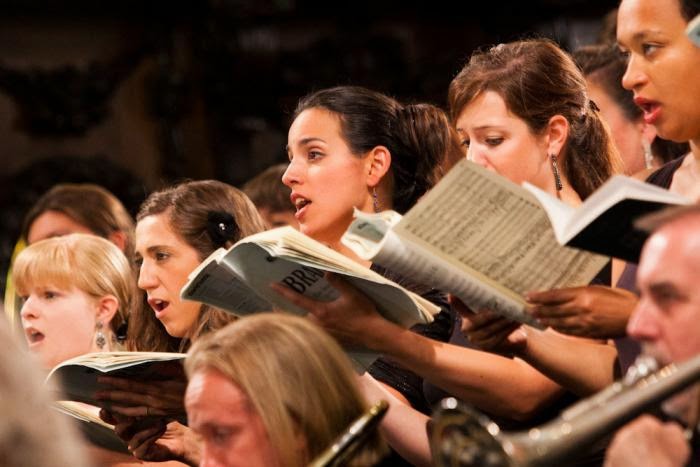
| Il quartetto Belcea a Varsavia, 27 agosto 2019. Foto (C) Wojciech Grzedziński / NIFC |
English version here
Uno dei tanti vantaggi del trascorrere una parte del proprio agosto
in Polonia è che il soggiorno si interseca col festival musicale "Chopin
i jego Europa" ("Chopin e la sua Europa") che da quindici anni a questa
parte raduna a Varsavia il fior fiore del concertismo (pianistico ma
non solo) mondiale.
Come tutti gli anni quando viene annunciato
il programma comincia per me un crudele gioco della torre, una spietata
selezione che ha lo scopo di conciliare la mia bulimia musicale con la
pazienza di Justyna e dei suoi parenti.
Quest'anno il processo è stato
più facile del solito; quando a fine aprile la lista dei concerti è
stata resa disponibile uno ha assunto immediatamente i connotati della
più assoluta e imprescindibile necessità: quello di due giorni fa del
quartetto Belcea con in programma tre quartetti di Beethoven.
L'
incisione discografica
dell'integrale beethoveniana a cura del Belcea (registrata in concerto
fra il 2011 e il 2012 e apparsa nel 2014) è a mio parere la più
interessante fra quelle comparse in questo scorcio di XXI secolo.
Il
Beethoven del quartetto Belcea non è - diciamo così - un Beethoven per
deboli di cuore: non è l'umanissima meditazione del quartetto Vegh, non è
la platonica contemplazione dell'armonia del quartetto di Tokyo, non è
la possente, tornitissima scultura del Quartetto Italiano. Quello del
Belcea è un Beethoven che abita un paesaggio scabro come quello
islandese di cui ogni rientranza, ogni dislivello vengono sottolineati
con un'urgenza espressiva ai confini con la ferocia. Tormento ed estasi
viaggiano affiancati e il senso della musica - sembra il messaggio di
questa interpretazione - risiede nel loro giustapporsi, nel modo in cui i
crepacci spaccano la roccia di basalto.
Su questi presupposti, la
mia curiosità maggiore era capire se e come i sette / otto anni
trascorsi dalla registrazione avessero modificato l'approccio di questi
fenomenali musicisti a queste opere e il programma che comprendeva tutte
le fasi della produzione quartettistica beethoveniana (l'op. 18 n. 3,
l'op. 59 n. 2 e l'op. 135) sembrava un campione abbastanza significativo
per avere qualche indicazione in merito.
Lo confesso: qualche
risposta l'ho avuta, ma è stata un'impresa ben più difficile del
previsto. È stata una faticaccia perchè quando si è travolti da tanta
bellezza gli argini di qualunque discorso analitico si mettono
pericolosamente a scricchiolare: come sempre succede quando hai la
fortuna di ascoltare artisti tanto dotati, quella che stai percependo in
quel momento ti sembra non l'unica intepretazione ma proprio l'unica
musica possibile. Voler elencare tutti i momenti da brivido si
ridurrebbe alla fine alla riproduzione integrale delle partiture dei
quartetti: in ordine sparso mi limiterò a citare il rapinoso inizio
dell'op. 18 n. 3, reso con una luminosità che ricreava un clima quasi da
Kegelstatt-Trio mozartiano, l'incredibile
Vivace dell'op.
135 (forse il movimento in cui maggiore è stata la divergenza con la
registrazione in CD), trasformato in un organismo pulsante di vita, e il
finale di bruciante intensità del
Razumowsky n. 2.
Quasi nel dubbio che fino a quel momento le emozioni offerte fossero state poche, il Belcea ha offerto come bis la
Cavatina dal quartetto op. 130, un'oasi di contemplazione che davvero si sarebbe voluto non finisse mai.
Sì ma quindi?
E
quindi sì, qualcosa è indubbiamente cambiato. L'intensità della luce è
la stessa, abbacinante, che nei CD, ma adesso è una luce più calda,
ancora nitidissima ma indubbiamente più soffusa: eravamo dalle parti del
Settimo sigillo, ora siamo pìù in zona
Posto delle fragole. Il Beethoven del Belcea edizione 2011 era un Beethoven nostro contemporaneo, questo del 2019 è un Beethoven
eternamente contemporaneo. Quello del 2011 era un Beethoven conturbante, questo è (anche) un Beethoven consolatore.
E
insomma: questo è uno di quei viaggi in cui il percorso è più
importante della meta. E io non posso che augurarmi, che augurarvi, di
avere molte altre occasioni di fare un pezzo di strada insieme a questi
Fantastici 4 dell'archetto.
For
Our Time, For All of Time: The Belcea Quartet Plays Beethoven
One
of the many advantages of spending August in Poland is that my
vacation coincides with the "Chopin i jego Europa" ("Chopin
and His Europe") Music Festival in Warsaw that brings together
the best pianists - but not only - from around the world.
Every
year, when the programme is announced, I am cruelly challenged to
balance my musical bulimia with the patience of Justyna and her
relatives. This year, however, the selection was easier than usual.
When the schedule of concerts was announced at the end of April, one
performance stood out as absolutely essential: the Belcea Quartet’s
performance (two days ago) of three Beethoven Quartets.
In
my opinion, the Belcea Quartet’s complete recording of Beethoven’s
quartets (recorded live in 2011-12 and published in 2014) is the most
interesting of all those that have been published since the new
millennium.
Their
Beethoven is not – so to speak – one for the faint of heart. It
is not the human meditation of the Vegh Quartet, nor is it the
platonic contemplation of the Tokyo Quartet or the exquisite
sculpture of the Italian Quartet.
When
the Belcea Quartet performs Beethoven, we are presented with a rugged
Icelandic landscape in which every nook and cranny, every drop, is
emphasized with an expressive urgency that nears ferociousness.
Torment and ecstasy travel hand in hand and the sense of the music –
seems to be the message of this interpretation – resides in its
juxtapositions, in the way crevices pry basalt apart.
On
the basis of these assumptions, my greatest curiosity was to
investigate if and how the 7-8 years that had elapsed since the
recording had modified the approach of these phenomenal musicians to
these works. And the programme, which included every phase of
Beethoven’s Quartet Compositions (Op. 18 N. 3, Op. 59 N. 2 and Op.
135), presented a promising sample to understand this.
I’ll
confess. I did find some answers, but the enterprise was far harder
than planned. It was difficult, because when you are overcome by such
beauty, the confines of any analytic discourse begin to creak
dangerously. And as always happens when you have the good fortune to
listen to such talented performers, in that moment, your perception
is not just that it is the only possible interpretation, but that it
is the only possible music.
<I’d
love to list all of the spine-tingling passages, but it would amount
to the full performance of all the Quartets. I would, however, like
to underline the furtive beginning of Op. 18 N. 3 that was performed
with a luminosity that reminded me of the Kegelstatt
Trio’s performance
of Mozart, the
incredible vivace
in Op. 135 (perhaps the movement with the greatest variation from the
recording) that was transformed into a life-pulsing entity, and the
intense finale of Razumowsky N.
2.
As
if they felt they had not sufficiently fired our emotions, as an
encore, the Belcea Quartet performed the Cavatina from
the Op. 130 Quartet, an oasis of contemplation that I wish had never
ended.
And
so?
So,
yes, something has certainly changed. The light has the same dazzling
intensity as on the CD, but it has now turned warmer: crystal-clear,
but softer. It has morphed from The
Seventh Seal
to Wild
Strawberries.
The 2011 Beethoven by the Belcea Quartet was contemporary, the 2019
version is eternally
contemporary. In 2011, their Beethoven was perturbing, now he is
(also) consolatory.
This
is one of those voyages during which the journey is more important
than the destination. And I can only hope that we will all have many
other opportunities to experience the Fantastic
Four of
string instruments.
***
The English translation above is a gift from my friend Laurence Steinman. Thank you, Larry!